
Last updated October 17, 2026
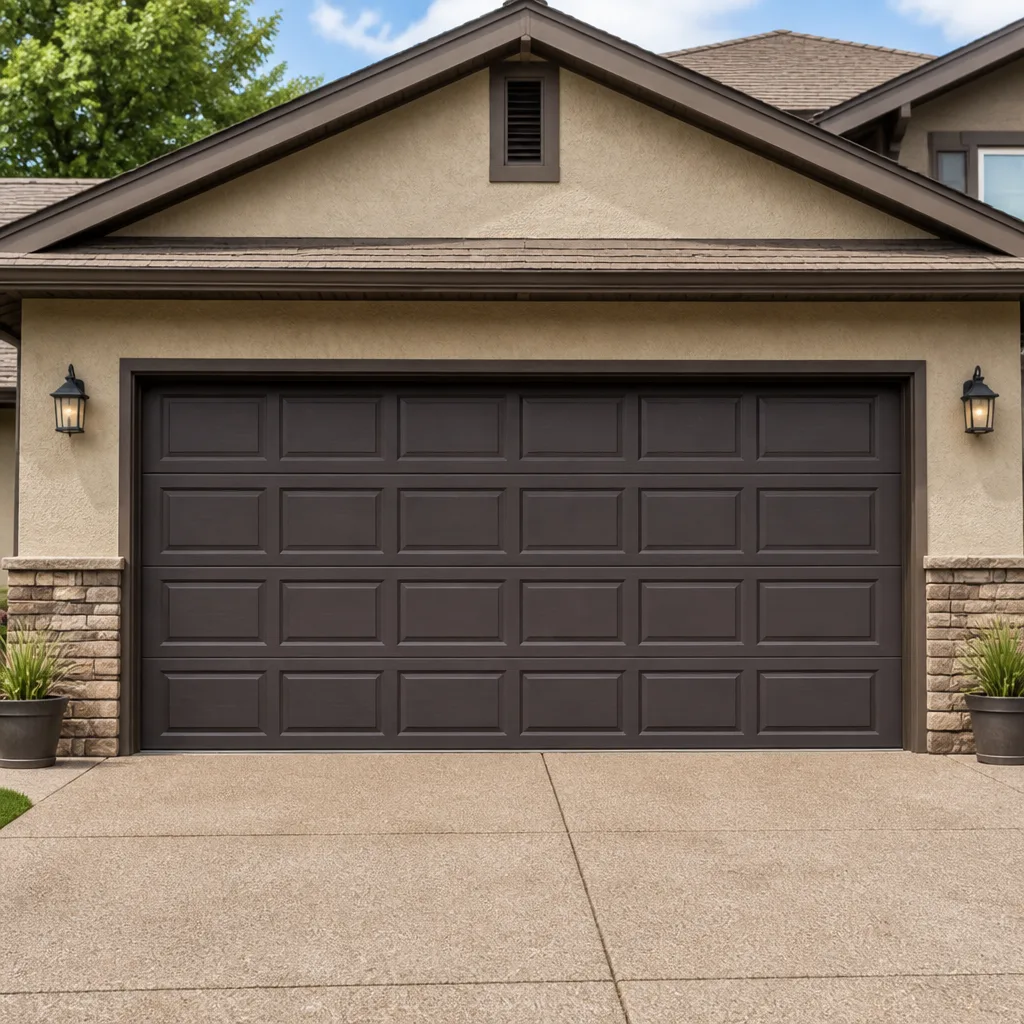 Raised-panel steel
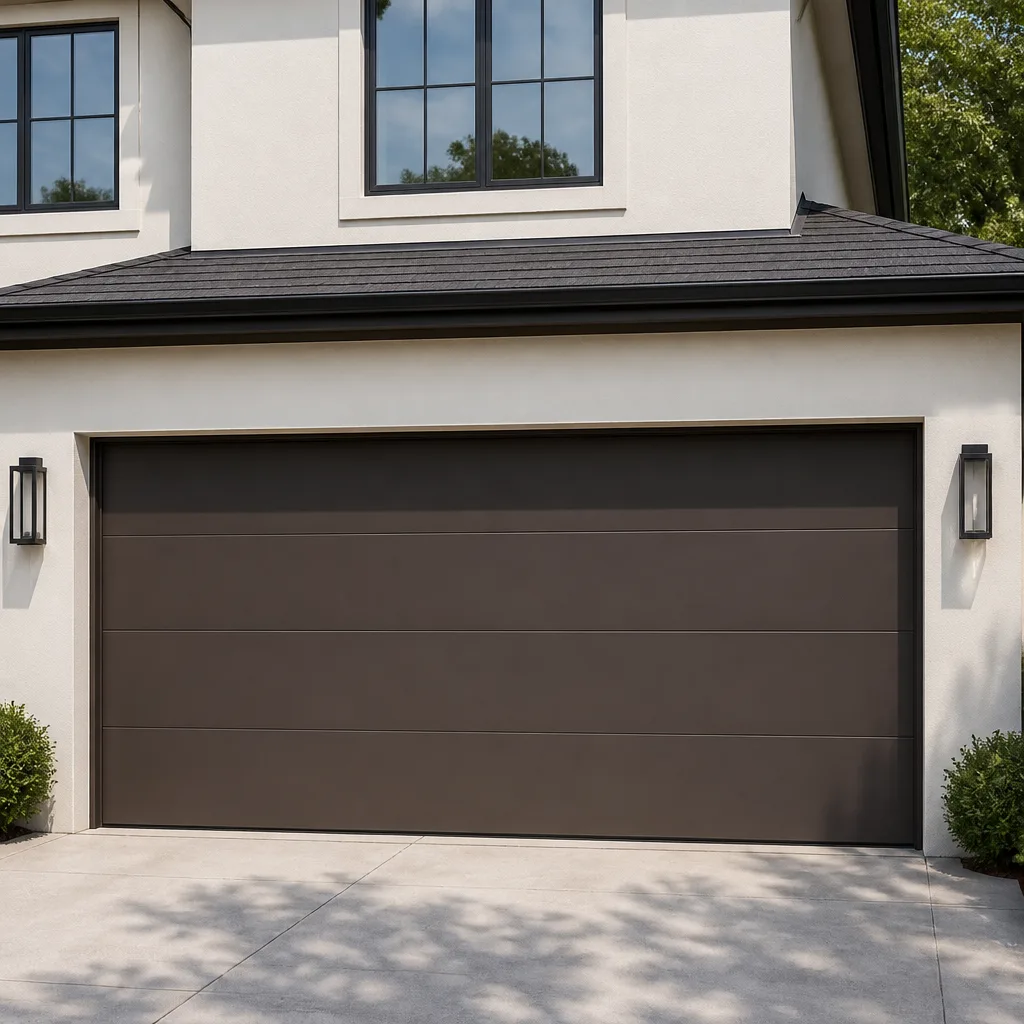 Modern flush
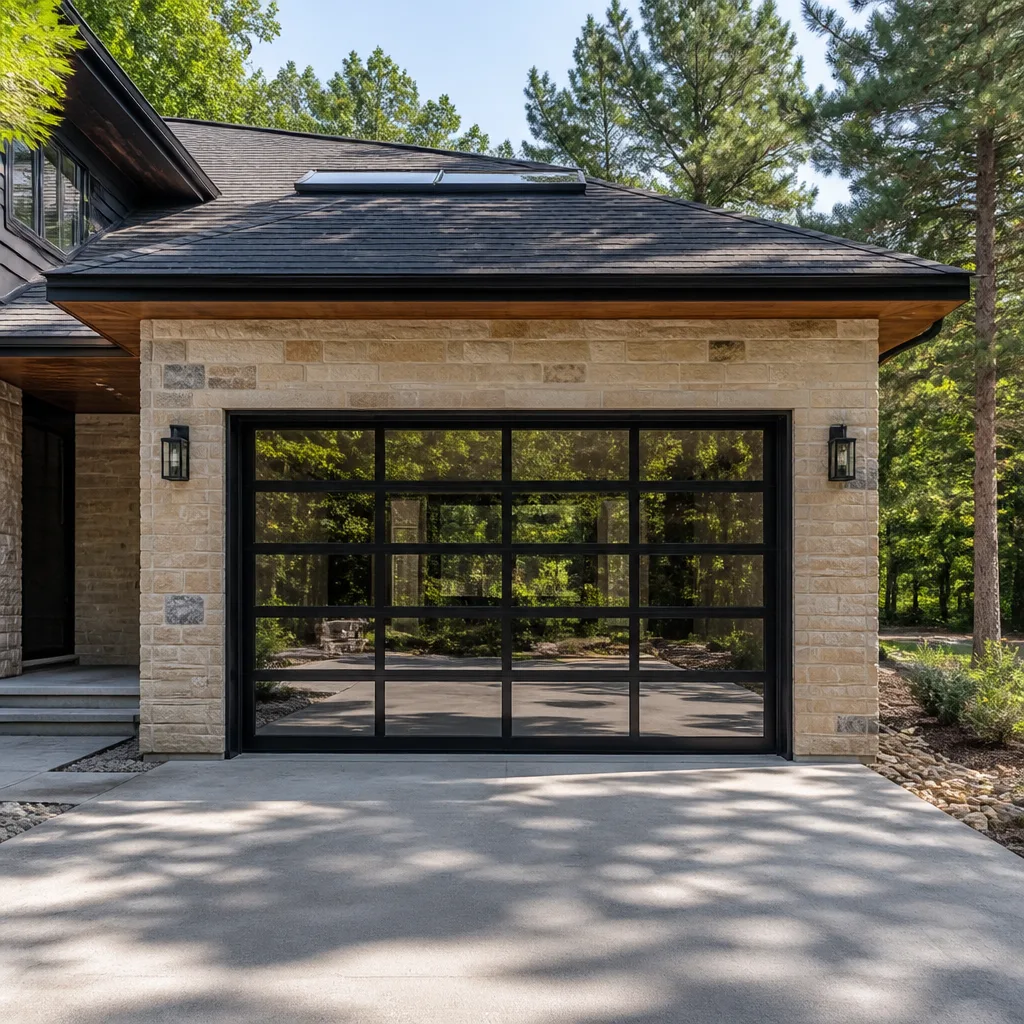 Full-view glass
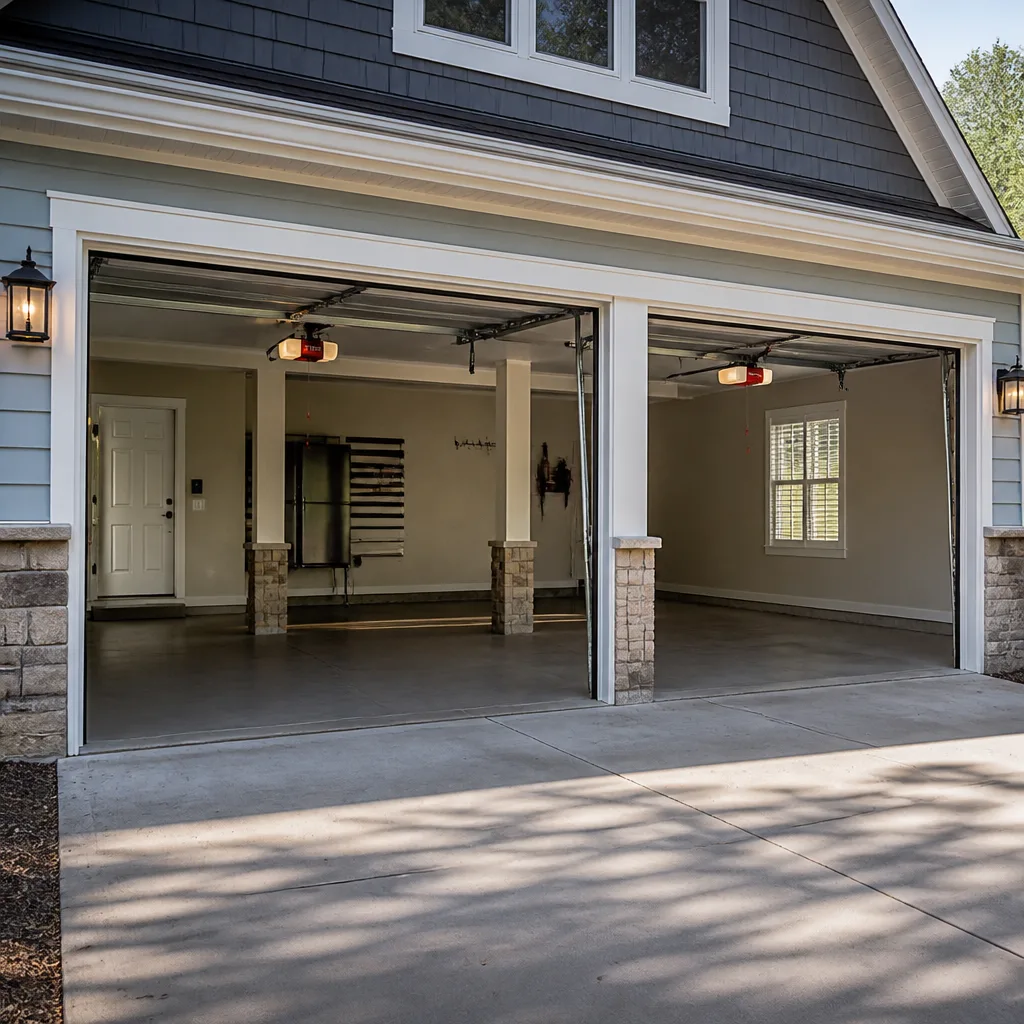 LiftMaster openers
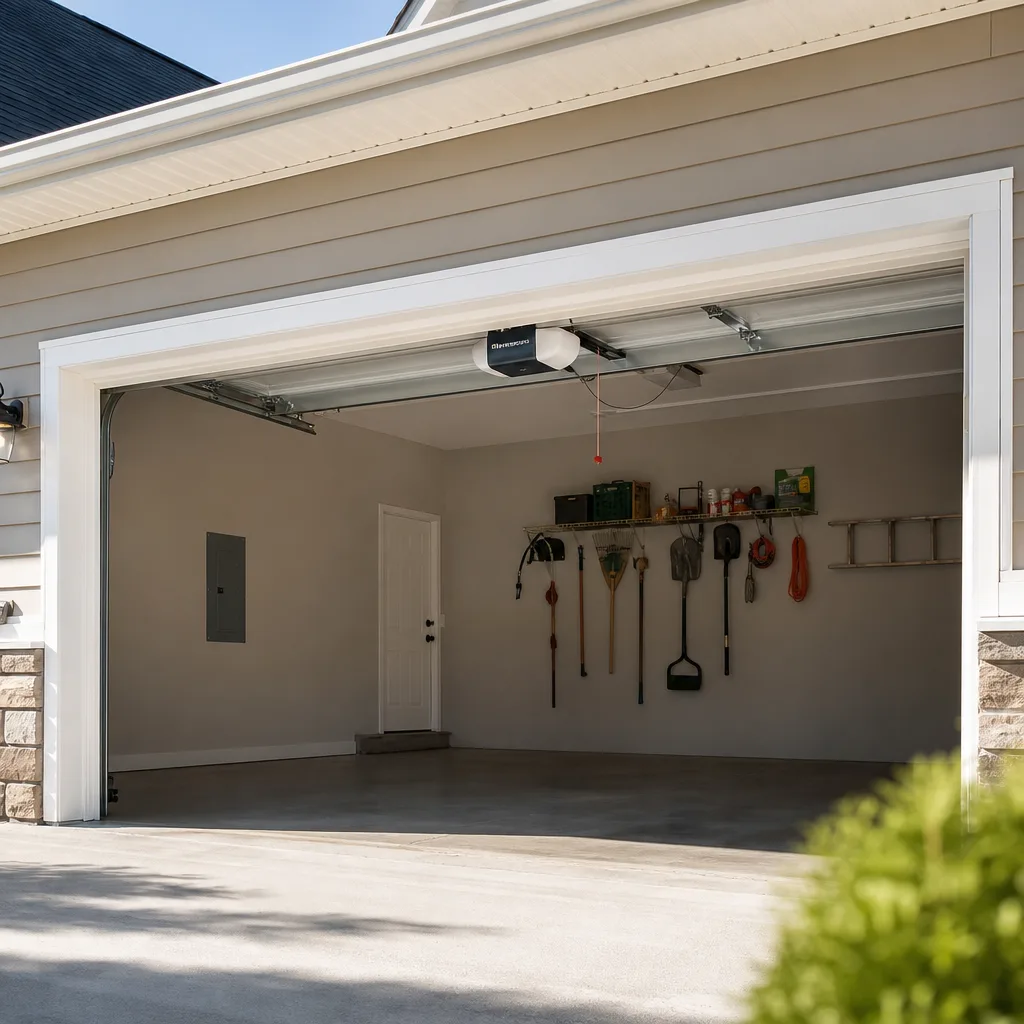 Chamberlain openers
Full 25-point door and opener safety check with every visit - springs, cables, rollers, tracks, and your LiftMaster or Chamberlain opener included
You get a price before we start. It does not change when the truck arrives.
Get your free estimateGarage Door Warning Signs: A Sacramento Homeowner’s Reference Guide
A garage door that pauses for half a second at the top of its travel before closing isn’t being slow. It’s telling you that one of the torsion springs is losing tension unevenly, a condition that typically precedes a full spring break within 30 to 90 days. The pause is a message. Most Sacramento homeowners just don’t know the language. This guide teaches you to read it. You’ll learn what specific sounds, movements, and visual markers mean in mechanical terms, how urgent each one is, and when a repair can wait versus when the door shouldn’t be operated at all.
Styles & brands we work with
Quick Answer
The most common garage door warning signs in Sacramento are a door that pauses or hesitates mid-travel, grinding or squealing sounds during operation, visible rust or fraying on springs and cables, an uneven door with one side lower than the other, and an opener that runs but doesn’t move the door. Each of these points to a specific component under stress. Most can be addressed affordably if caught early, while ignored warning signs frequently lead to spring breaks or cable snaps that leave the door stuck closed.
Table of Contents
- A Sound-by-Sound Reference: What Your Garage Door Is Saying
- Visual Markers on Springs, Cables, and Panels
- Reading an Uneven Door: What the Geometry Tells You
- Opener Behavioral Signs: Logic Board and Capacitor Failures
- Severity Tiers: What Can Wait, What Can’t, and What Means Stop
- Sacramento-Specific Factors: Heat, Dust, and Door Wear
- Common Mistakes to Avoid
- When to Call a Professional
- Frequently Asked Questions
- The Bottom Line
A Sound-by-Sound Reference: What Your Garage Door Is Saying
A garage door in good working order makes a low, even hum. Not silence, but a steady mechanical sound without sharp edges. When the sound changes, the door is communicating. Here’s what Sacramento homeowners should know about each specific noise.
Grinding
Grinding is the sound of metal on metal without adequate lubrication or with a misaligned component. In Sacramento’s dry, dusty climate, this is one of the most common complaints we hear. Dust from the Delta breeze works its way into roller bearings and hinge points, and once the lubricant breaks down, the metal surfaces begin to abrade each other. Grinding in a roller means the bearing has worn past its greased life and the sleeve is now turning dry against the stem. Left alone, it will damage the track itself, turning a $20 roller replacement into a track replacement that can run $150 to $250 per track section. Grinding near the center of the door, where the torsion springs are mounted, can also indicate a spring that is binding on the shaft or a bearing plate that has gone dry. That’s a different problem with a different urgency level, but it shares one thing with roller grinding: it gets more expensive the longer it waits.
Squealing
Squealing is a higher-frequency version of the same underlying issue, usually concentrated at a single point. A torsion spring that squeals during operation is often rubbing against itself or the shaft, and in most cases a proper lubricant applied by a technician quiets it immediately. But squealing can also come from a cable that’s starting to fray and dragging against a pulley. That’s not a lubrication problem. That’s a structural one. A good diagnostic habit is to listen for whether the squeal is rhythmic and tied to the door’s travel, which suggests a rotating component, or irregular and intermittent, which points to a cable or spring catching. Like most repair work on Garage Door Repair in Sacramento, the distinction matters because one path is maintenance and the other is a warning sign before a failure.
Popping
Popping is the sound of one or more coils in a torsion spring shifting slightly as the spring rotates and releases tension. In many cases it’s benign, especially in older doors where the springs have settled into their cones. But in other cases, a recurring pop at the same point in the cycle is the first audible hint that a spring is starting to fatigue. Torsion springs are rated for a number of cycles, typically 10,000 on standard springs and up to 20,000 or more on upgraded ones, and once that count has been consumed, the steel begins to lose its memory. A spring that pops during normal travel is telling you that its coils are no longer returning to their original geometry perfectly. It may continue to work for weeks or months. It may also break without further warning. We tell Sacramento homeowners that if the door still moves smoothly and the pop is occasional, it’s worth a visual inspection, not an emergency. But if the pop happens every cycle and is accompanied by a slight hitch in the door’s movement, schedule a spring inspection sooner. Garage Door Spring Repair in Sacramento is one of the most common calls we answer, and early intervention is the difference between a spring replacement and a door that’s stuck on its tracks with a vehicle trapped inside.
Rattling
Rattling is the sound of loose hardware. It’s the most common noise complaint we hear from Sacramento homeowners, and it’s usually the least dire. Nuts and bolts on the hinges, track brackets, and opener mounts can loosen over time as the door cycles thousands of times a year. A rattle typically means one of these has backed off a thread or two and the component is vibrating under load. The fix is usually a matter of tightening everything on the door, and we recommend doing that once a year regardless of whether you’ve heard anything. The one rattle that deserves closer attention is a rattle from the center of the torsion spring assembly, because that can mean a bearing plate has loosened and the spring shaft is now running slightly out of round. Tightening that plate and checking the bearing is a straightforward job for a technician and a poor do-it-yourself project, given the stored energy in the spring system.
Visual Markers on Springs, Cables, and Panels
Sound is one diagnostic channel. Sight is another, and in our experience the visual signs are the ones Sacramento homeowners are most likely to dismiss because they don’t know what they’re looking at. Let’s go through the markers that matter, component by component.
Torsion Spring Rust: Harmless Versus Alarming
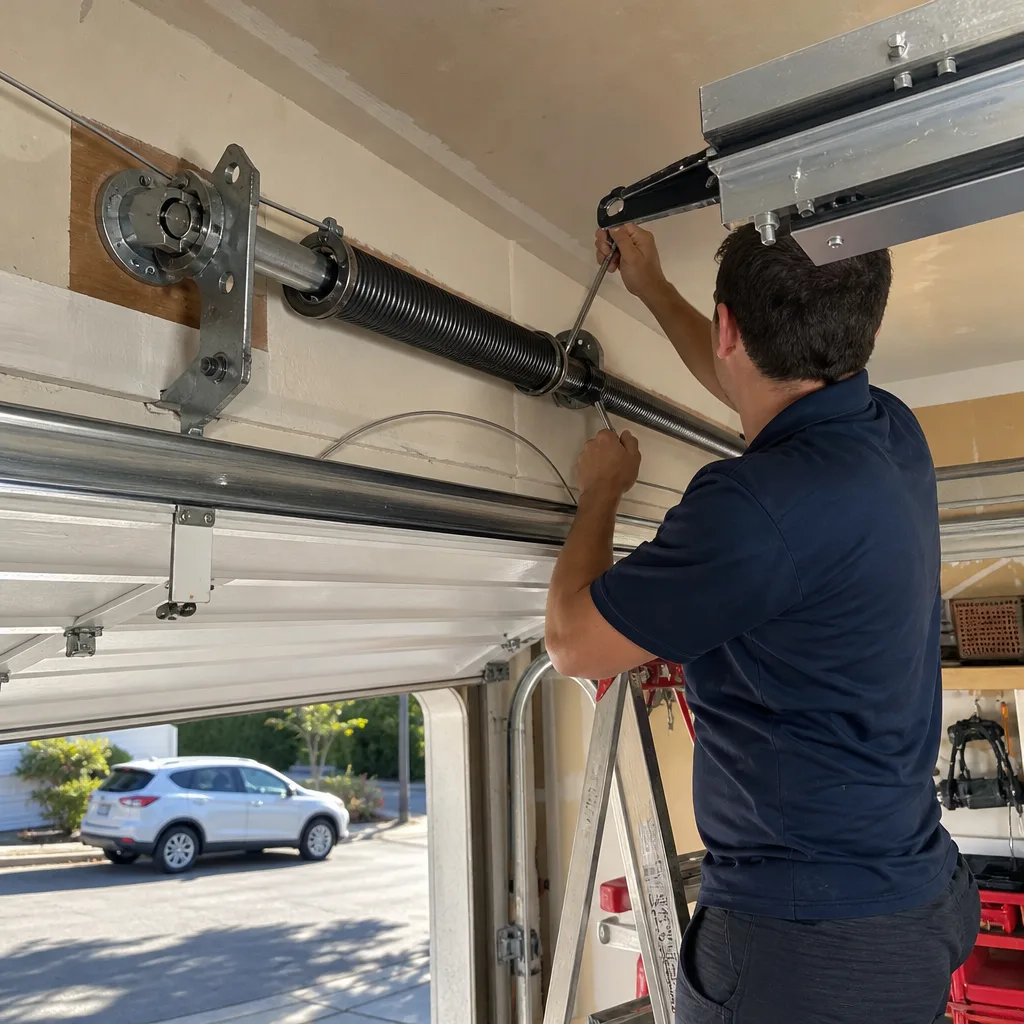
Torsion springs are bare steel, and bare steel in Sacramento’s relatively dry climate will often develop a light, even surface oxidation that looks like a fine brown dust. That’s cosmetic. It does not affect spring performance and it does not indicate imminent failure. What does matter is pitting or flaking. If the rust has eaten into the surface of the coil so that the spring looks textured or scaly rather than smooth, the steel has been structurally compromised. Pitted springs are more likely to break, and they should be scheduled for replacement. Another pattern we watch for is rust concentrated at the spring’s end cones rather than spread evenly across the coil. Rust at the cones suggests moisture has been working its way into the spring’s attachment point, which is exactly where the stress concentrates during operation. A spring with visible pitting, flaking, or cone rust should be evaluated by a technician before it fails under load.
Cable Fraying
Garage door cables are made of braided steel strands, and when one or more of those strands break, the cable begins to look fuzzy in that section. This is not a subtle sign once you know to look for it. A frayed cable has begun to fail, and a cable that’s already lost a significant number of strands is a genuinely dangerous component, because if it parts while the door is mid-travel, the entire weight of the door can shift violently to the other cable. We advise Sacramento homeowners to inspect their cables once every couple of months. Hold a flashlight and look at the cable where it passes over the pulley and where it attaches to the bottom bracket. If you see any fuzzy or protruding strands, stop using the door and call for repair. This is not one of the signs that can wait.
Panel Condition: Cracks, Bowing, and Separation
The panels on a residential garage door are usually steel over a foam or polystyrene core, and they’re designed to flex slightly as the door moves. But there are patterns of wear that indicate structural problems rather than normal expansion and contraction. A vertical crack through a panel, especially near the center stile where the hinges attach, means the panel has been stressed beyond its design and is no longer distributing load evenly. Bowing, where the panel curves outward in the middle when the door is closed, usually means the reinforcing strut on the inside of the panel has worked loose or the panel itself has absorbed moisture and begun to deform. Sacramento’s summer heat is a factor here. Panels exposed to direct afternoon sun on west-facing doors can hit surface temperatures well above ambient, and over years that repeated thermal cycling can cause adhesive breakdown between the steel skin and the core. A door with a cracked or bowed panel may still operate, but it’s losing its structural integrity and putting extra load on the springs and cables. Depending on the door model and the extent of the damage, a panel replacement is sometimes the better long-term choice.
Reading an Uneven Door: What the Geometry Tells You
An uneven garage door is one of the clearest diagnostic signs available to a homeowner, because the pattern of the unevenness points to different components. Here’s how to read it.
One Side Lower Than the Other
If the door sits lower on one side when it’s closed, the first thing to check is whether the lower corner is actually touching the ground or whether there’s a visible gap. A consistent gap along one side usually points to a cable issue. The door is suspended by two cables, one on each side, and when one cable has stretched slightly or begun to slip on its drum, that side will sag. This can also happen when one torsion spring has lost more tension than its partner, which is common on two-spring systems where the springs were installed at the same time but have aged differently. The fix is usually a cable adjustment or a spring rebalancing, and it’s important to correct it before the imbalance starts putting asymmetric load on the remaining spring and the center bearing.
Bowing at the Center
A door that bows downward in the center when closed, with gaps at both corners, is often showing you that the panels have lost their rigidity and the door’s weight is no longer supported evenly across its width. This pattern is more common on older doors and on doors that have been hit by a vehicle at some point and then straightened rather than properly repaired. It can also be a sign that the springs are undersized for the door’s actual weight, which happens when a homeowner replaces panels or adds insulation without recalibrating the spring assembly. The corrective path depends on the cause, but the diagnostic point is simple: a center bow is a message about weight distribution and panel integrity, not a cosmetic issue.
Gaps Along the Floor Seal
Gaps along the bottom seal are normal to a degree, especially on older concrete that has settled or cracked. A garage floor in Sacramento can shift subtly with seasonal soil moisture changes, and a rigid door will not perfectly track a rigid floor. But what we watch for is a gap that appears on one side and gradually worsens, or a gap that lets visible light into the garage along an entire side. That’s an alignment problem, not a floor problem. The door’s travel has drifted, and over time the rollers will begin to wear unevenly and the tracks will start to flex. A gap along the floor is also a practical concern in Sacramento because of the heat. A one-inch gap along the bottom of a west-facing door lets a surprising amount of hot air into the garage, which in turn raises the temperature of anything stored inside and, in attached garages, puts load on the home’s cooling system.
Opener Behavioral Signs: Logic Board and Capacitor Failures
When a garage door opener starts behaving strangely, most Sacramento homeowners reach for the remote battery first. That’s a reasonable instinct, but it’s only the first chapter of the story. Here are the behaviors that point to the opener’s internal components rather than the handset.
The Opener Runs But the Door Doesn’t Move
If you press the wall button and hear the motor running but the door stays put, the opener has disengaged from the drive system. In most cases this is the emergency release having been pulled, either deliberately or by accident. Reengaging it is usually a matter of pulling the release cord toward the door and running the opener through a cycle. But if the opener runs and the door doesn’t move even after reengagement, the drive gear is worn. Openers built by LiftMaster and Raynor use a plastic worm gear that is designed to strip as a sacrificial component if the door encounters too much resistance, and once that gear has stripped, the motor spins freely. This is a repair a technician can do on site, and it’s usually a fraction of the cost of replacing the entire opener.
The Door Reverses Immediately After Closing
When a door starts down and then reverses before it reaches the floor, and this happens repeatedly, the most common cause is a misadjusted force setting or a safety sensor that’s being triggered. The safety sensors near the bottom of each track are designed to reverse the door if anything crosses their beam, and in a dusty Sacramento garage, a layer of fine dust on the sensor lens can cause exactly this symptom. Cleaning both lenses with a dry cloth is a reasonable first step. But if the reversal continues after cleaning and after checking that the sensors are aligned, the issue may be the opener’s logic board misreading sensor input. A logic board failure presents in different ways across brands, but repeated false reversals, a door that begins closing and then starts again from the top, and an opener that ignores the wall button but responds to the remote are all patterns we’ve seen. These are opener repairs, not remote problems, and they’re worth diagnosing before the opener is condemned.
The Opener Makes a Humming Sound But Doesn’t Start
A short, low hum when you press the button, followed by nothing, is the classic sound of a failing start capacitor. The capacitor provides the surge of current needed to get the motor turning, and when it degrades, the motor can’t overcome its initial inertia. This is a small, inexpensive component and a straightforward replacement for a technician. The repair is more common on openers that are ten years old or older, and in Sacramento’s heat, capacitors degrade faster than their rated lifespan because sustained high garage temperatures break down the internal dielectric. If your opener hums but doesn’t move, leave the door closed and call for service. Repeatedly pressing the button while the capacitor is failing can damage the motor windings and turn a small repair into a full opener replacement.
Severity Tiers: What Can Wait, What Can’t, and What Means Stop
Not every warning sign is an emergency. In fact, one of the most useful things a homeowner can learn is how to triage what they’re seeing and hearing. Here’s our three-tier framework, based on the patterns we’ve observed across thousands of Sacramento garage door service calls.
Tier 1: Can Wait Two Weeks
- Occasional grinding or squealing from a roller or hinge. The component is wearing, but it’s not at risk of sudden failure. Schedule lubrication and inspection on a normal timeline.
- A faint rattle that doesn’t change with the door’s position. This is almost always loose hardware. Tightening can wait for routine maintenance.
- Light, even surface rust on torsion springs. Cosmetic only. Note it and move on.
- A small gap along the bottom seal that’s been stable for months. The door is slightly out of level. Correcting it will improve efficiency and reduce wear, but it’s not urgent.
Tier 2: Schedule Within 72 Hours
- Popping that occurs every cycle and is accompanied by a visible hitch in the door’s travel. This suggests spring fatigue. The spring may not fail immediately, but the risk is climbing.
- One side of the door visibly lower than the other. The imbalance is putting asymmetric load on the system, and every additional cycle compounds the wear.
- A bow at the center of the door. The panels or reinforcement are failing, and continued use will accelerate the damage.
- An opener that hums but doesn’t start. The capacitor is likely failing, and continued button-pressing damages the motor.
- Repeated false reversals after cleaning the sensors and confirming alignment. The logic board may be misreading input. This tends to worsen, not improve.
Tier 3: Do Not Use the Door Until Repaired
- Visible fraying on any cable. A cable that parts under load can cause a violent, dangerous failure. Stop using the door immediately.
- Pitting or flaking rust on torsion springs. The spring has been structurally compromised. It can break without additional warning, and a spring break releases significant stored energy.
- A door that pauses at the top of its travel before closing, each cycle. This is the classic prelude to a spring break. The spring has lost enough tension that it can no longer hold the door’s weight evenly through the cycle.
- A loud bang from the garage followed by the door refusing to move. That’s a spring that has already broken. Do not attempt to open the door manually with the opener engaged, and do not try to retension or replace the spring yourself. High-tension springs under load are genuinely dangerous, and this is a repair for a trained professional with the right tools and training.
One note on the Tier 3 list. We understand that being told not to use your door until it’s repaired is disruptive, especially if your vehicle is inside the garage. In most cases, a technician can respond the same day, and the repair itself is measured in hours rather than days. The temporary inconvenience of keeping the door closed is short, while the alternative is a door that fails mid-cycle and damages the track, the panels, or worse.
Sacramento-Specific Factors: Heat, Dust, and Door Wear
Sacramento’s climate shapes how garage doors wear, and a guide written for a coastal market misses half the story. Our summers push garage temperatures well above outdoor ambient, especially in neighborhoods like Natomas, Elk Grove, and Citrus Heights where west-facing doors absorb afternoon sun for hours. In an attached garage without ventilation, it’s not unusual for the interior to exceed 120 degrees on a July afternoon, and that heat does more than make the space uncomfortable. It degrades lubricants, accelerates capacitor aging, and causes thermal cycling on steel components that shortens their working life.
The dust is another factor. Sacramento sits in a corridor where dry, fine particulate moves through with the Delta breeze, and that dust finds its way into every hinge, roller, and bearing on a garage door. Rollers that would last 15 years in a coastal climate often need replacement in 8 to 10 years here, not because the steel is inferior but because the environment is harder on them. The practical takeaway is that Sacramento homeowners benefit from seasonal garage door care and annual lubrication and inspection more than most, and it’s a service we provide as part of routine maintenance on doors throughout the region.
Then there’s the question of spring cycles. A garage door spring is rated for a number of open-and-close cycles, and a family with two vehicles and teenagers who come and go through the garage can put 1,200 to 1,500 cycles on a door in a year. At that rate, a standard 10,000-cycle spring reaches its design limit in roughly seven years. Upgrading to a 20,000-cycle spring adds meaningful lifespan and reduces the likelihood of a mid-cycle break. It’s an option we discuss with every Sacramento homeowner during a spring replacement because it changes the long-term math on the door, and it’s one of those decisions that’s easier to make before a failure than after one.
Common Mistakes to Avoid
- Lubricating a spring with WD-40. WD-40 is a water displacer, not a lubricant, and it does nothing for the long-term reduction of friction on a torsion spring. A proper garage door lubricant is what the spring needs. Sacramento’s dust makes the right lubricant choice more important, because the wrong product attracts particulate rather than resisting it.
- Ignoring a popping sound because the door still works. The door working and the door being healthy are different things. A spring that pops every cycle is telling you something, and the cost of ignoring it is a door that eventually won’t open at all.
- Replacing the remote battery instead of checking the opener’s response. If the wall button has the same problem as the remote, it’s not the remote. This single insight would save Sacramento homeowners a surprising amount of time and frustration.
- Attempting to replace a torsion spring yourself. The stored energy in a wound torsion spring is significant, and without the correct winding bars and training, the risks are severe. This is a repair for a professional, and the cost of a service call is far less than the cost of getting it wrong.
- Using the door manually without disengaging the opener. Forcing a door that’s still connected to its opener strains the drive system and the emergency release, and it can compound the original problem into two or three problems.
- Waiting until the door fails to schedule maintenance. The least expensive garage door repair is the one that happens before something breaks. An annual inspection, tightening, and lubrication visit costs a fraction of an emergency spring or cable repair, and it extends the life of every component.
When to Call a Professional
Some garage door work is genuinely do-it-yourself, like tightening a loose hinge bolt or cleaning the safety sensor lenses. But any repair that involves the torsion springs, the lift cables, or the opener’s internal electrical components is work for a trained technician. The springs are under high tension and the cables carry the full weight of the door, and the consequences of a mistake are serious. If your door is showing any Tier 2 or Tier 3 warning sign, or if you’re not sure what a particular noise or movement means, the most useful thing you can do is get a professional opinion rather than guess. See how to hire a garage door contractor in Sacramento for guidance on choosing the right technician. Fernbrook Garage Doors Sacramento offers free estimates in Sacramento, and a live person answers the phone 24 hours a day at (279) 236-2640. We’ll talk through what you’re seeing and hearing, help you triage it, and if a visit makes sense, we’ll show up with a written price before any work begins.
Frequently Asked Questions
The most common warning sign we see on Sacramento garage doors is a door that pauses briefly at the top of its travel before closing, which typically indicates uneven spring tension and frequently precedes a spring break within one to three months. Call (279) 236-2640 to have it inspected, and a technician can tell you whether the spring has remaining life or should be replaced now.
Garage door spring repair in Sacramento typically costs $180 to $340 for a standard torsion spring replacement, with upgraded high-cycle springs running $250 to $450 depending on the door weight and spring rating. Cable replacement adds $120 to $180 per cable. The price is quoted in writing before any work starts when you call (279) 236-2640.
An occasional pop may be harmless, but a spring that pops every cycle and is accompanied by a visible hitch in the door’s travel should be inspected within 72 hours, because the spring is showing signs of fatigue and the risk of a mid-cycle break is increasing. If the popping is loud, consistent, and getting worse, stop using the door and call (279) 236-2640.
No, it won’t. At Fernbrook Garage Doors Sacramento, a written price is presented before any work begins on every visit, and that’s the price you pay unless you approve a change in scope. The quote reflects what the technician explains he will do, and there are no surprise invoices. Call (279) 236-2640 for a free estimate.
Yes, our technicians carry torsion springs in the most common Sacramento residential sizes, replacement cables, rollers, hinges, and opener components as standard truck stock, which means most repairs are completed in a single visit. For less common brands like Raynor or Wayne Dalton, parts are sourced quickly from local distributors, and we’ll tell you before you commit to anything if a second visit will be needed. Call (279) 236-2640 and we’ll let you know what to expect.
A noisy garage door is frequently a sign of a mechanical problem that will become a safety issue if ignored, because sounds like grinding, popping, and rattling correspond to roller wear, spring fatigue, and loose hardware respectively. The noise itself isn’t dangerous, but the underlying conditions it reveals can be. Call (279) 236-2640 to have the door inspected and lubricated, and we’ll identify which sounds are benign and which need attention.
The Bottom Line
Your garage door is always communicating with you, and once you know the language, the next step is usually straightforward. Grinding means roller wear. Popping means spring fatigue. A pause at the top of the travel means a spring that’s losing tension. A frayed cable means stop using the door. Each sign has a severity tier, and most of them can be addressed affordably when they’re caught while still small. The Sacramento climate makes annual maintenance more valuable here than in most markets, and the single highest-return habit is simply paying attention when the door doesn’t sound, move, or sit the way it always has. For anything that falls in the Tier 2 or Tier 3 category, or any sound you can’t identify, call Fernbrook Garage Doors Sacramento at (279) 236-2640, and explore more guides & resources to keep your door running smoothly. A live person answers, the estimate is free, and the price is in writing before the work begins.
Written by Jesse Calder, Owner at Fernbrook Garage Doors Sacramento, serving Sacramento since 2002.
See the difference
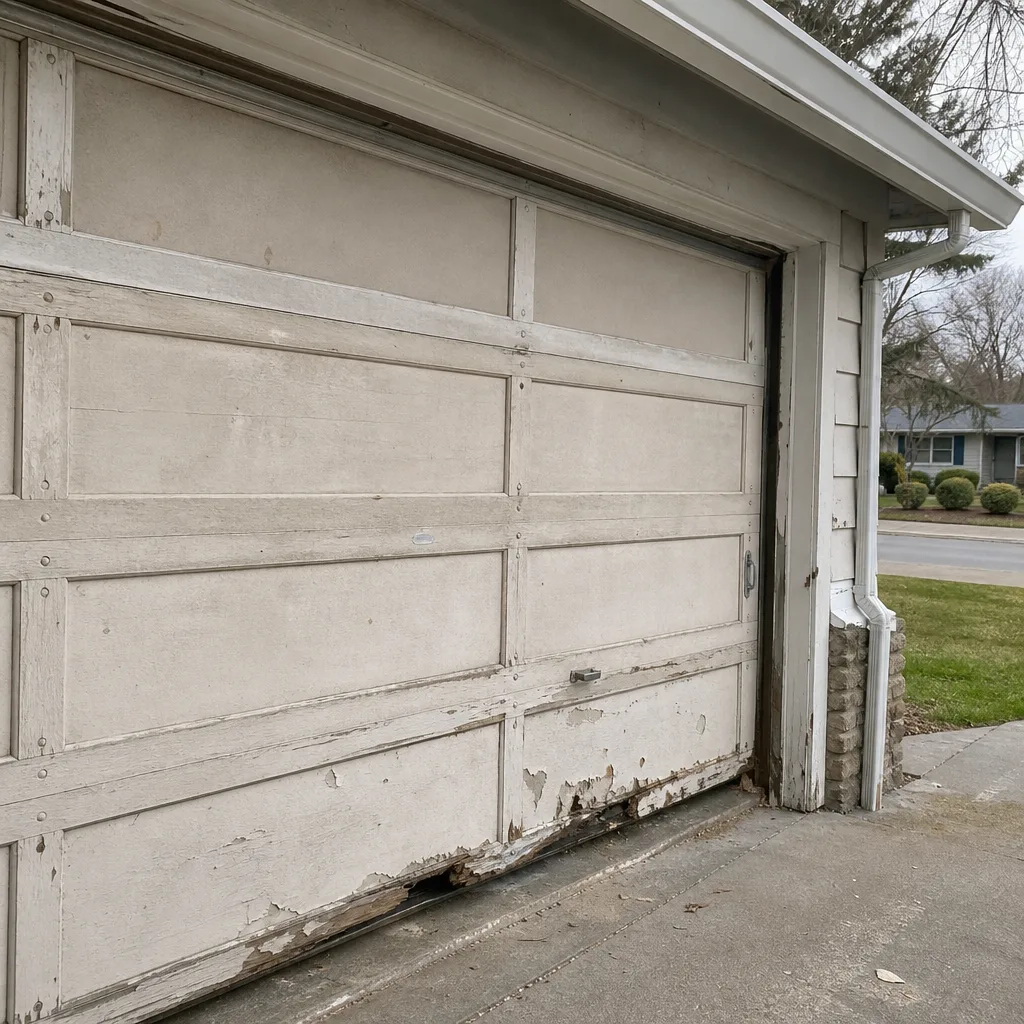 Before
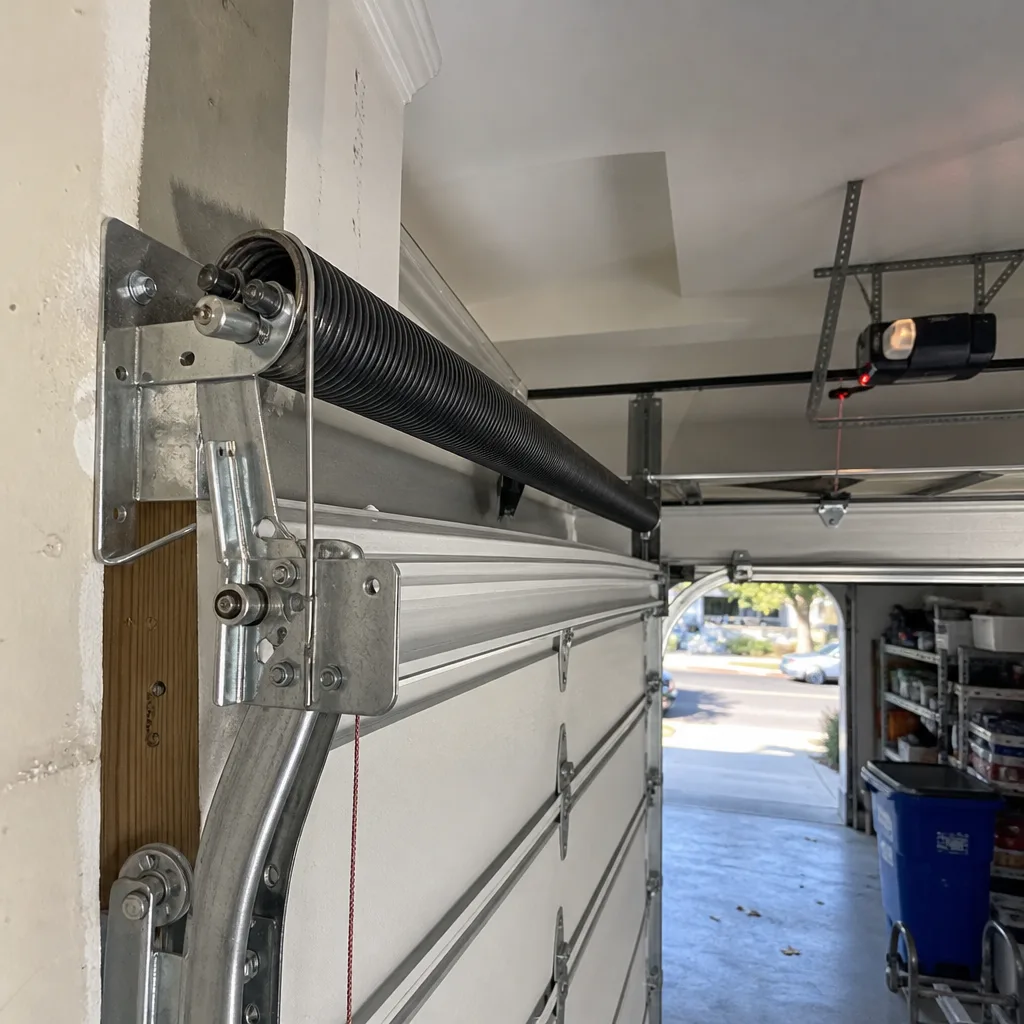 After
After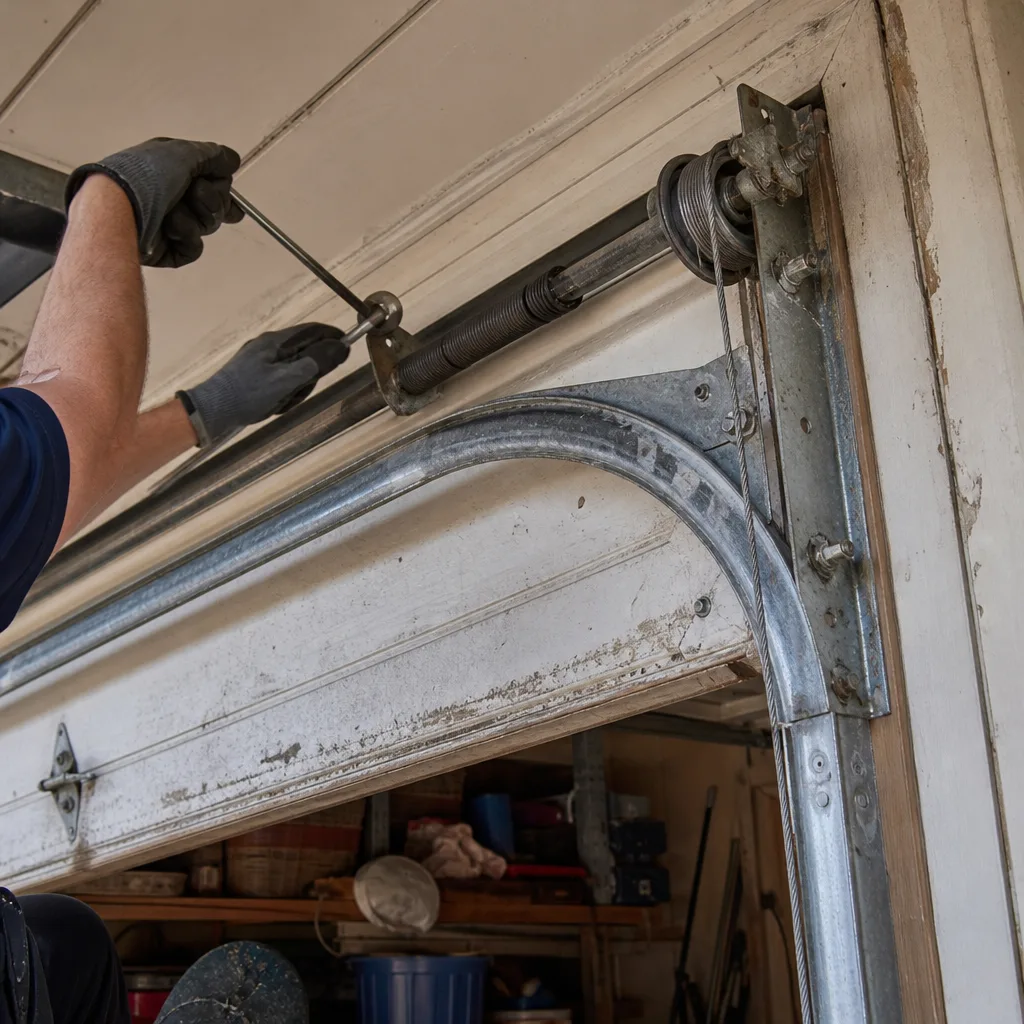 Before
 After
After